Your Calm Is the Intervention
Why your child reads your state long before they hear your words, and how leading your own nervous system changes everything
🟡 Busy Parent Snapshot
Your child melts down, and you reach for everything you have been taught.
The breathing cards. The counting. The calm voice. The reward chart.
The harder you work to settle them, the bigger it seems to get.
You end up activated too, and quietly wondering what you are missing.
Here is the piece almost no one names.
The techniques were never the missing part. Your state was.
💡 What if the reason the calm-down strategies keep falling flat is that your child is reading your state, not your words?
🧠 What if your own activation, the urgency and tightness that leaks out even as you hold it together, is the very thing their nervous system is responding to?
The Harder She Worked, the Worse It Got
Let me tell you about a boy I’ll call Jack, and his mum, Clare.
Jack is seven.
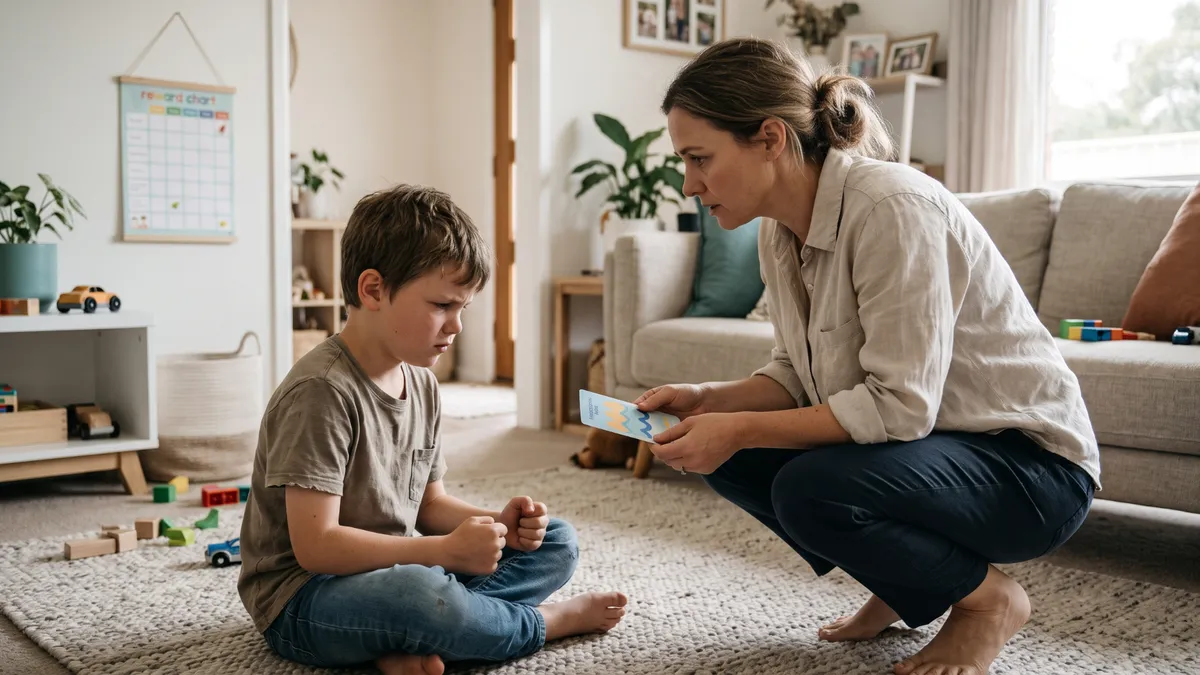
When Jack tips into a meltdown, Clare does everything a loving, informed parent is told to do.
She reaches for the breathing cards.
She counts with him.
She offers the reward chart.
She keeps her voice level and says all the right words.
And most of the time, things escalate anyway.
Why?
Clare is activated too.
Her chest is tight, her voice has an edge she did not choose, and some part of her is bracing for the storm.
The calmer she is working to appear, the more wound up Jack becomes.
Clare had started to believe she was the problem.
She was not.
She was missing one piece, the piece almost no one is taught.
Your Child Is Reading Your State, Not Your Words
Here is what is really happening in those moments.
When a child’s nervous system is activated, it does not reach for your instructions.
It scans you.
It is reading, faster than thought, for a handful of cues.
Calm or urgency.
Presence or distraction.
Steadiness or reactivity.
And it regulates with what it finds, not what you say.
This is why the perfect words, delivered from a system that is braced underneath, do not land.
Jack was not responding to Clare’s calm voice.
He was responding to the activation underneath it, the tight chest and the braced body his nervous system could read in an instant.
Survival is contagious.
A child near an activated adult picks up the signal that there is something to be activated about.
And here is the hopeful half of the same truth. Safety is contagious too.
💡 Takeaway #1
A child in survival reads your state, not your words.
Their nervous system scans for calm or urgency, and regulates with what it finds.
The perfect script, delivered from an activated body, does not reach them.
Your state is the message, long before your words are.
You Can Only Take Them Where You Have Been
This is the heart of it, and it changes everything once you see it.
You can only lead a child to a level of calm you can reach yourself.
A calm you are not in is a calm you have nothing to pass on.
No technique bridges that gap, because the child is regulating with your actual state, not the technique.
So the real work in the hard moment is not something you do for your child.
It is something you do in yourself, first.
And this is worth saying gently, because it matters.
Clare’s own activation was not a failure.
It was her own nervous system, doing what it learned to do long ago, bracing to keep her safe.
Her son’s distress pulled her straight into her own old survival response, faster than she could think.
Seeing that was the turning point. Not blame. Awareness.
The moment Clare understood that her state was the lever, she had something real to work with.
Leadership Is Felt Before It Is Spoken
Before a single word is said, your nervous system has already spoken.
Your tone.
Your pace.
Your breath.
Your posture.
Where your attention is.
These are the true messages a child’s system reads, and they arrive long before the sentence does.
Which means settling your own state is not a distraction from helping your child.
It is the help they need.
Regulating yourself is not selfish, and it is not self-indulgent.
It is the most responsible, most powerful thing you can offer, because your calm is the thing their system borrows to find its own.
💡 Takeaway #2
You can only lead a child to a level of calm you can reach yourself.
A calm you are not in is a calm you have nothing to pass on.
So settling your own state is not a distraction from helping.
It is the real help your child needs.
Regulating yourself is responsible, not selfish.
What Changed for Jack
Clare made one shift.
She stopped working on Jack, and started with herself.
When the next meltdown began, she did not reach for a card or a script.
She took one slow deep belly breath, all the way down, and settled her own system first.
She softened her shoulders.
She let her own bracing ease.
Only then did she come alongside him, from a body that was genuinely steady rather than one performing calm.
She did not say anything clever.
She was simply there, grounded, unhurried, unworried.
And Jack’s nervous system, scanning as it always did, found a different cue.
The adult beside me is not alarmed.
Maybe I am safe.
Little by little, his system borrowed her steadiness and began to settle. Not because she managed his behaviour, because she led her own state, and his system followed hers home.
Over the following weeks, the meltdowns grew shorter and less frequent.
Jack was learning something underneath all of it.
A big emotion can rise, move through, and settle, and the people around me stay steady while it does.
That is how a child learns their inner world is safe.
💡 Takeaway #3
Behaviour settles when the nervous system settles.
And a child’s system settles around a calm, steady adult, not a better meltdown management technique.
This is nervous system leadership.
When you lead your own state to safety, you give your child’s system something steady to follow.
💡 What You Can Practise This Fortnight
Settle yourself first. Before you reach for any strategy, take one slow deep breath all the way down into your belly then breathe out through your mouth and settle your own system. You can only pass on a calm you are actually in. Your state is the intervention.
Notice your own activation, without judgement. In the hard moment, quietly name it to yourself: “my chest is tight, I am bracing.” Noticing your own state is what gives you the choice to adjust and settle it.
Lead with your body, not your script. Soften your shoulders, slow your pace, lower your voice from a settled place. Your tone, breath, and posture reach your child long before your words.
Be present before you are useful. You do not have to fix the moment. Being a steady, unworried presence beside your child is already doing the most powerful thing available.
Treat your own calm as the priority. Regulating yourself is not selfish. It is the steadiness your child borrows to find their own, and it is the most generous thing you can offer the whole home.
🎯 Want to Go Deeper?
Tired of walking on eggshells around your child or teen?
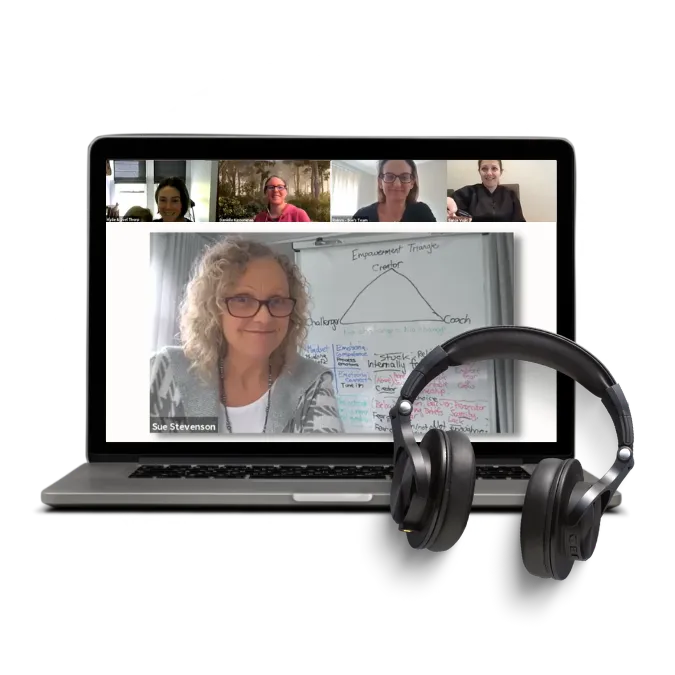
Watch my free 90-minute online class, anytime you like, and discover the proven approach over 1,000 families have used to bring calm, connection, and confidence back into their home.
I’m Sue, an anxiety support specialist with personal and professional experience turning stress, anxiety and chaos into calm.
With care,
Sue 😊