When Helping Makes It Worse
Why rushing to fix a hard moment can deepen it, and what a nervous system is really asking for
🟡 Busy Parent Snapshot
Your teen comes home flat, or upset, or snapping at everyone. So you do what any loving parent does. You step in. You ask questions. You offer solutions. You reassure them it will be fine. And somehow, the more you help, the more they shut down or push you away.
Here is the piece that turns it around. At that moment, your teen is not asking for solutions. They are asking for one thing. Safety.
💡 What if every time you rush in to fix it, your teen’s nervous system hears something you never intended?
🧠 What if a system in survival is not asking for answers, and is instead asking only to feel safe?
✨ What if doing less, not more, is what finally lets them settle?
This is the story of one fifteen year old, and the quiet shift that changed everything.
The More He Helped, the More She Shut Down
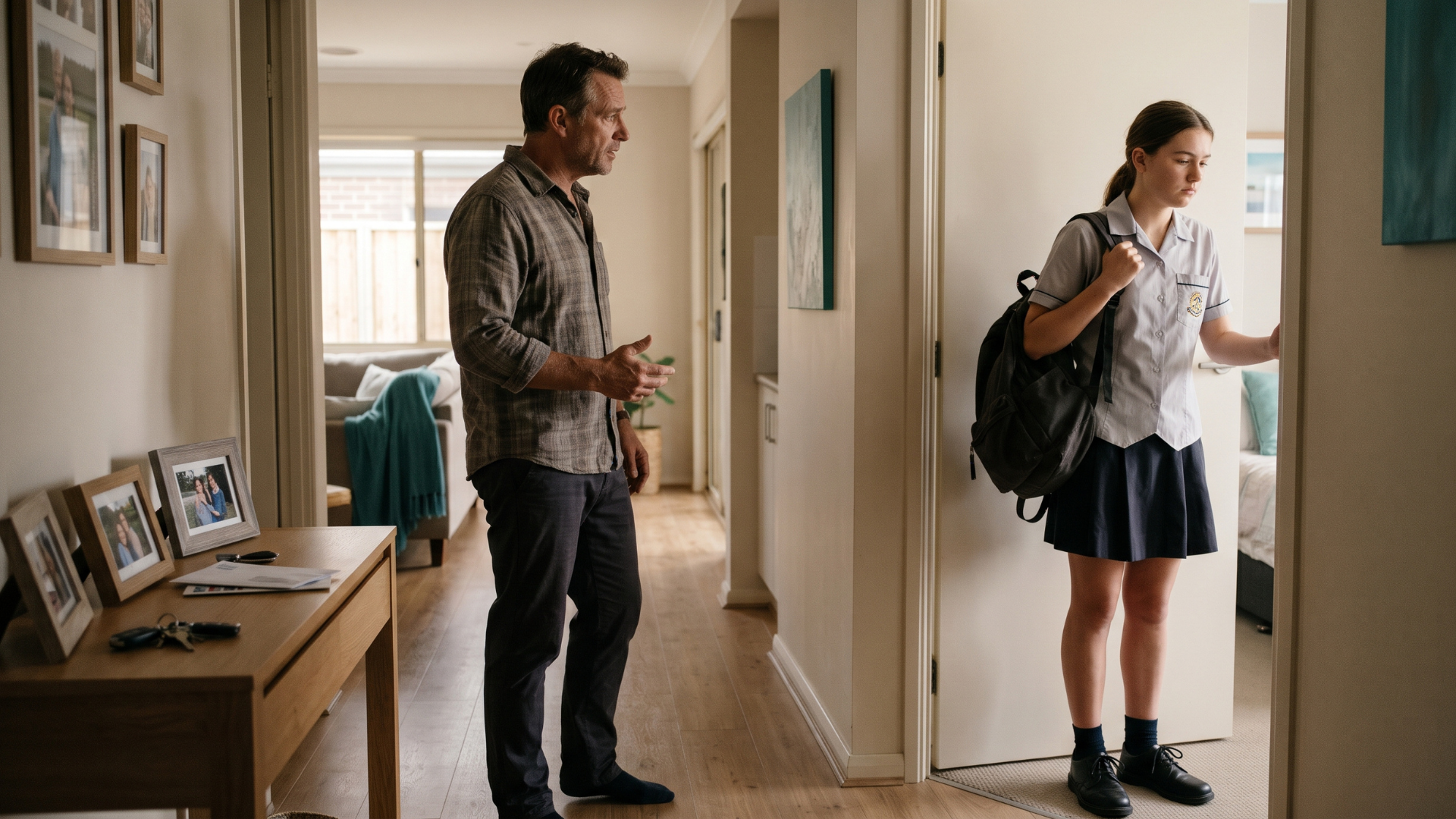
Let me tell you about a girl I’ll call Zoe, and her dad, Mark. Zoe is fifteen.
When Zoe comes home carrying a hard day, Mark moves in to help.
What happened?
Who said that?
Have you thought about handling it this way?
It will all blow over, you’ll see.
Every word comes from love, and from a genuine wish to take her pain away.
And every time, Zoe shuts the door a little harder.
She snaps, or goes quiet, or disappears to her room.
Mark is left baffled, and hurt, and more worried than before.
He was doing everything right, by the map most of us were handed.
And it kept making things worse.
The map was missing a piece.
A System in Survival Is Not Asking for Solutions
Here is what was really happening underneath.
When a nervous system is activated, it is not looking for answers.
It is looking for safety.
Those are two completely different needs, and only one of them settles a system in survival.
So when Mark flooded in with questions, solutions, and reassurance, loving as it all was, Zoe’s system did not receive help.
It received a quiet, unintended message.
This is too big. You are not okay as you are. You need to be fixed.
To a nervous system already in survival, that message reads as more threat.
And a system that senses more threat does the only thing it knows.
It protects harder.
More shutting down.
More snapping.
More distance.
The fixing was never received as love at that moment.
It was received as pressure.
And pressure is the one thing a system in survival has no room for.
💡 Takeaway #1
A nervous system in survival is not asking for solutions.
It is asking for safety.
Those are different needs, and only safety settles it.
Rushing to fix, reassure, or correct, loving as it is, can land as “you are not okay as you are,” which a system in survival reads as more threat.
Why Less Intervention Creates More Calm
This is the counterintuitive truth at the heart of it.
With a system in survival, less intervention often creates more regulation, not less.
That runs against every instinct.
When our child is struggling, everything in us says do more, say more, solve more.
And here is the honest part worth naming.
The urge to fix is very often about our own discomfort, not our child’s need.
A child or teen in distress is hard to be near.
It activates the parent’s own system, and the rush to fix is frequently our own nervous system reaching for relief, a way to make the discomfort stop.
That is not a criticism.
It is one of the most human things there is.
And seeing it is what gives us a choice.
When Mark could settle his own system first, breathe, relax and respond rather than automatically react to his own discomfort, he no longer needed to fix Zoe to feel okay himself.
And that freed him to offer the one thing she was actually asking for.
Presence Is the Most Powerful Thing You Can Offer
Presence is not doing nothing.
Presence is doing the thing that matters most.
When you stay grounded, breathe deeply and slowly, keep your own system steady, and remain warm and available, without rushing to fix, you send a signal no solution can carry.
You are safe here.
You do not have to be anything other than what you are right now.
No one can force that signal, and no one can fake it.
A teenager reads an adult who is genuinely present in a heartbeat, and they can feel the difference between someone “trying” to manage them and someone simply with them.
Presence is being authentically available.
It has to be embodied.
And when it is, it does what no amount of fixing can.
It tells a frightened system it is safe to settle.
💡 Takeaway #2
The urge to fix is often about our own discomfort, not our child’s need.
Settling your own response first is what frees you to offer presence.
Presence is not doing nothing.
It is the most powerful thing you can offer, and it says what no solution can: you are safe here.
What Changed for Zoe
Mark made one shift.
He stopped leading with solutions, and started leading with presence.
The next time Zoe came home carrying a hard day, he settled his own system first.
Then he sat near her, unhurried, and said something simple.
“That sounds really hard. I’m here. You don’t have to work any of it out right now.”
Then he stopped talking.
No questions.
No solutions.
No reassurance.
Just a steady, warm presence, with no agenda to change her.
Something in Zoe loosened.
For the first time in a long while, she was not being managed.
She was being met.
And a little while later, from a system that finally felt safe, she started to talk. Not because he pulled it out of her; because safety did what pressure never could. It let her open on her own.
This is the move at the heart of real leadership.
From managing behaviour to guiding the state.
When a system feels safe, behaviour settles on its own, and the young person in front of you comes back into view.
💡 Takeaway #3
When a nervous system feels safe, behaviour settles on its own.
Safety does what pressure never can.
This is the shift from managing behaviour to guiding state.
You do not have to fix your teen.
Instead you get to be the safe, steady presence they can settle toward.
💡 What You Can Practise This Fortnight
Provide safety, not answers. When your teen is activated, remind yourself they are asking to feel safe, not to be fixed. That one reframe changes everything you do next.
Notice the urge to fix. Notice the moment you move in with questions, solutions, or reassurance, and ask gently whose discomfort it is easing. Often the urge to fix is our own system reaching for relief.
Settle your own response first. Take a slow, deep belly breath and steady yourself before you say a word. When you no longer need to fix your teen to feel okay yourself, you can finally offer presence.
Offer presence, then stop. Reach for “that sounds really hard, I’m here, you don’t have to sort it out right now,” and then simply stay present. Resist the questions and the advice. Let safety do the work.
Trust that less is more. With a system of survival, doing less is not neglect. It is the intervention. When your teen feels safe, they will often open on their own.
🎯 Want to Go Deeper?
Tired of walking on eggshells around your child or teen?
Watch my free 90-minute online class, anytime you like, and discover the proven approach over 1,000 families have used to bring calm, connection, and confidence back into their home.
I’m Sue, an anxiety support specialist with personal and professional experience turning stress, anxiety and chaos into calm.
With care,
Sue 😊