When Calm Switches to Panic in Seconds. Here’s What’s Really Happening
Why your child isn’t “an anxious kid,” and why that changes how you help them
🟡 Busy Parent Snapshot
One minute your child is fine.
The next, they’re panicking, frozen, or melting down over something that doesn’t seem like a big deal.
And somewhere along the way, someone told you they “have anxiety,” like it’s a fixed part of who they are.
But what if that belief is actually making it harder for your child and for you?
💡 What if anxiety isn’t something your child has, but a survival state their nervous system learned?
🧠 What if it isn’t permanent, but a pattern that can be unlearned?
✨ What if understanding this is the key to helping your child, with confidence and compassion, without believing something is “wrong” with them?
This article shows you what anxiety really is, using one ordinary morning you’ll probably recognise.
The Morning Nothing Was Wrong
Picture a normal Tuesday.
Your daughter is dressed.
Breakfast is half eaten.
You mention, without thinking twice, that her usual teacher is away today and there’s a substitute.
And just like that, she changes.
Her shoulders climb.
Her breathing goes shallow.
She says she feels sick.
She says she can’t go.
Two minutes ago she was fine.
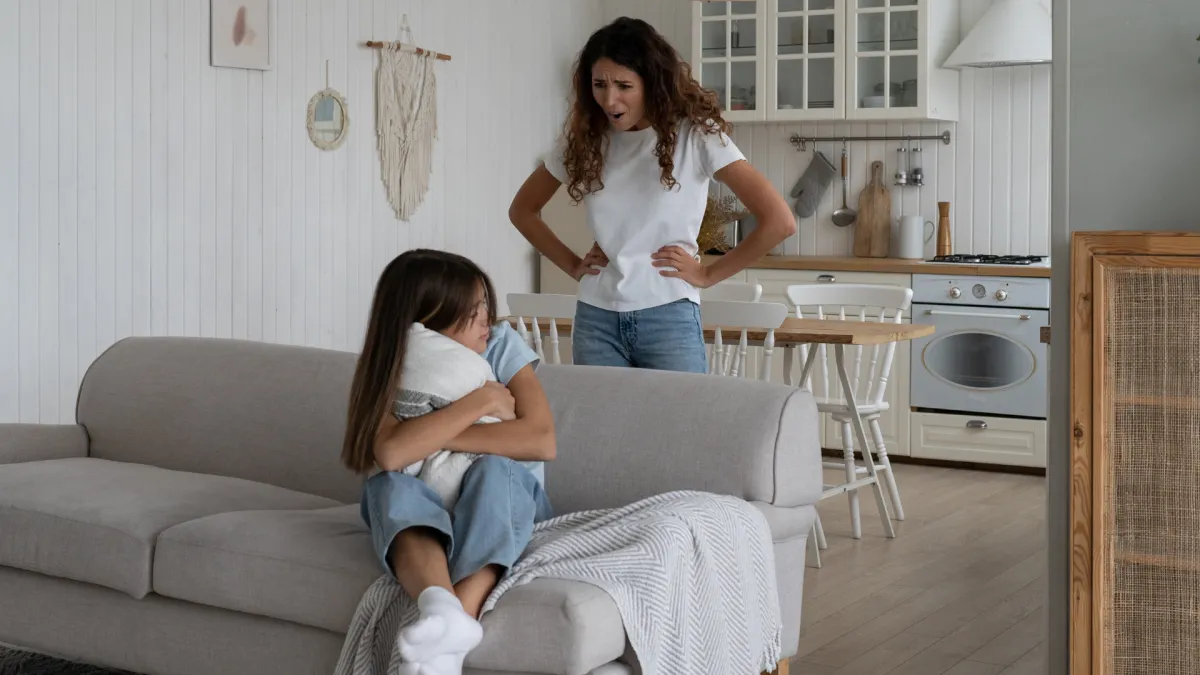
Now she’s at the bottom of the stairs, arms wrapped around herself, refusing to move.
Nothing dangerous happened.
Nobody was unkind.
From the outside, there’s nothing to be anxious about.
So what just happened?
Anxiety Is a State, Not Who Your Child Is
Here’s one of the most limiting beliefs we carry as parents.
That anxiety is a thing our child has.
A label. A personality trait.
Just who they are.
“He’s an anxious kid.”
“She’s always been this way.”
But anxiety is not who your child is.
And it’s not evidence that something is wrong with them.
Anxiety is a survival state.
It’s not fixed.
It’s not permanent.
It’s not a personality trait.
It’s a mind and body response that switches on when the brain decides something is unsafe, even when there’s no real danger in front of them at all.
The same child who froze at the stairs was relaxed at the breakfast table two minutes earlier.
Nothing about who she is changed in those two minutes.
Only her state changed.
💡 Takeaway #1
Anxiety is not who your child is, and it’s not what your child has.
It’s a survival state their nervous system learned, one that can be unlearned with presence and support.
Why a Substitute Teacher Felt Like Danger
Your child’s body didn’t overreact.
It responded, perfectly, to something you couldn’t see.
Anxiety doesn’t arise from what’s happening now.
It arises from what the present moment reminds the nervous system of.
Maybe, a long time ago, an unpredictable day left your child feeling unsafe.
A change with no warning.
A moment that felt too big to handle.
The fear from that moment was never fully felt or finished, so the body filed it away and stayed alert for anything that felt the same.
A substitute teacher means the day is unpredictable.
And unpredictable, to her nervous system, means unsafe.
The survival brain doesn’t ask, “Is this actually dangerous?”
It asks, “Does this feel familiar?”
The answer was yes, so it switched on protection in an instant.
The body reacts first.
The story comes later.
💡 Takeaway #2
Anxiety isn’t caused by the present moment.
It’s caused by what the present moment reminds the body of.
Your child isn’t being difficult.
Their nervous system is reacting to the past, not the present.
Why “She Has Anxiety” Quietly Makes It Harder
When we say a child has anxiety, the way they have brown eyes, we tell ourselves three things that simply aren’t true.
That it’s permanent.
That it’s fixed.
That it’s who they are.
And each of those quietly takes away hope.
If anxiety is just who your child is, there’s nothing to do but manage it forever.
However, if it’s a state their nervous system entered, then there’s a way through.
Because states can be entered, and states can be left.
Listen to the difference. “She’s an anxious child” closes the door.
“Her nervous system went into a survival state this morning” opens it.
Same child. Same morning. A completely different future.
The words we use shape what we believe is possible.
So we choose them with care.
What Helps in the Moment
Back at the stairs.
You don’t argue with the feeling.
You don’t explain why substitute teachers are perfectly fine.
You don’t rush her out the door.
Instead, you sit down on the step beside her.
Not above her.
Beside her.
You slow your own breathing.
And you say, quietly, “Something feels not-okay right now, hey? I’m right here. Let’s just breathe together for a minute.”
You don’t fix anything.
You stay.
And slowly, her body starts to gather new information: the scary thing isn’t happening now, and I’m not alone in this.
Her shoulders drop.
Her breath deepens on its own.
The “I can’t” loosens its grip.
A little later, she walks into class.
Not because she was forced.
Not because the substitute teacher stopped being new.
It is because her state shifted, and from a calmer state, walking in was possible.
You didn’t change the situation.
You changed the state she met it from.
That’s the whole thing.
💡 Takeaway #3
When the state changes, the experience changes.
You don’t need to remove what your child is afraid of.
You need to help their nervous system feel safe, and from there, what feels impossible becomes possible.
🎯 Start Right Now: 3 Action Steps
Notice the switch. Get curious. Next time your child flips from calm to panicked, notice the order: the body changes first, the reason comes after. Quietly naming it to yourself, “that’s the state switching on,” keeps you out of the “what’s wrong with them” spiral.
Breathe first, talk later. In the heat of the moment, skip the explanation. Lower your voice, slow your own breath, sit close. Emotional connection is key here. Logic only lands once the body feels safe.
Anchor them to “now”. Let them know you’re here with them right now. For example, “I’m here for you. There’s no rush. Let’s sit here and breathe together until your body feels safe again.” This gives their nervous system the present-moment, safety it’s missing.
Swap the sentence. Trade “he’s an anxious kid” for “his nervous system went into a survival state.” Say it out loud once this week and notice what shifts in you.
Put this somewhere you’ll see it:
Fear is natural.
Anxiety is created.
What we create can be uncreated.
“Anxiety is a created nervous system state, not a personal flaw, and it can be uncreated.”
🎯 Want to Go Deeper?
If this article resonated with you, and you’re ready to support your anxious child without pressure, panic, or perfection, I invite you to watch my free class
You don’t need to fix everything.
You just need to start.
And if you’re reading this, you already have.
With care,
Sue 😊