What Anxiety Really Is (and What It’s Not)
Why your child’s anxiety is almost never about what’s happening right now.
🟡 Busy Parent Snapshot
You’ve watched your child react as if something is genuinely dangerous, in a moment that couldn’t be safer. A quiet classroom. A friend’s house. An ordinary conversation at the dinner table. And you’ve thought, “There is nothing to be scared of here.”
You’re right. And that’s exactly the clue.
💡 What if anxiety isn’t caused by what’s happening now, but by what this moment reminds your child’s body of?
🧠 What if their reaction isn’t an overreaction, but an accurate response to something you can’t see?
✨ What if understanding what anxiety really is, and what it is not, is what finally lets you help in a way that lasts?
This article shows you what anxiety actually is, using one family’s afternoon you’ll likely recognise.
The Party Where Nothing Was Wrong
Let me tell you about a little boy I’ll call Leo. He’s seven.
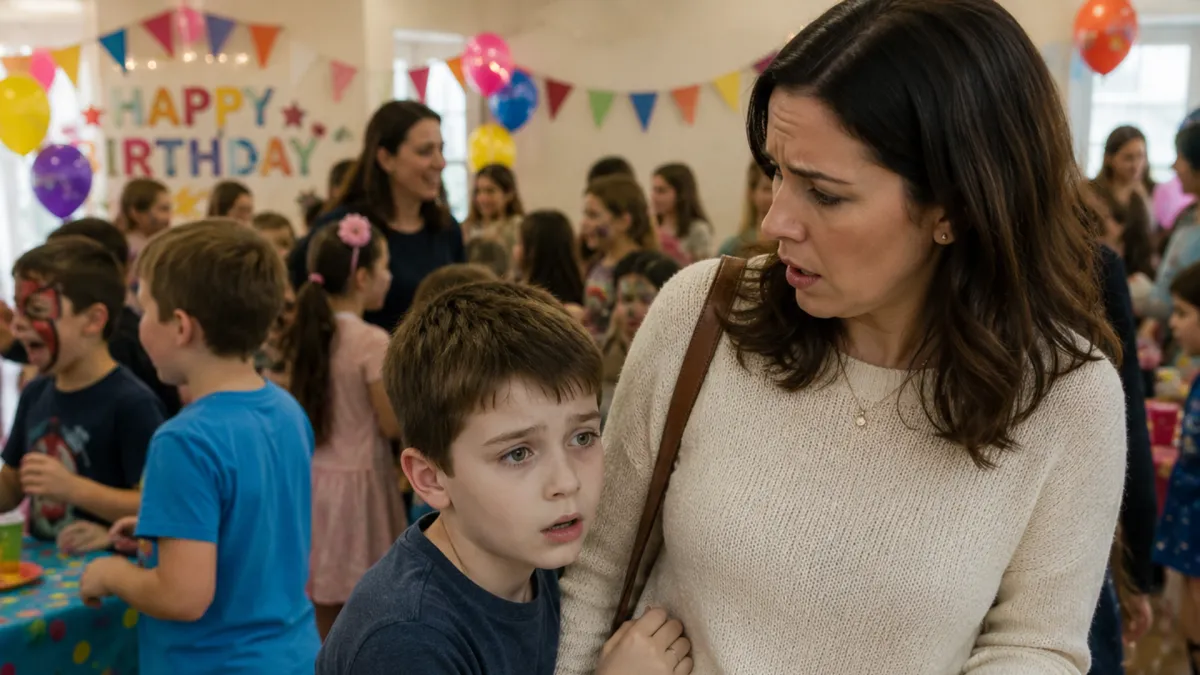
Leo is at a friend’s birthday party.
Jumping castle.
Party food.
The kind of afternoon a child dreams about.
Then the room fills up.
The noise rises.
A few kids start shrieking with excitement.
And Leo changes.
He goes pale.
He finds his mum, presses into her side, and says he wants to go home.
Right now.
His mum is baffled.
Nobody was unkind. Nothing went wrong.
The party is, by any measure, lovely.
So why is her son reacting as if the room is on fire?
Anxiety Is Not Caused by the Present Moment
Here is one of the most misunderstood truths about anxiety.
Anxiety is rarely about what is happening now.
It is about what the present moment reminds the nervous system of.
The body does not respond to events.
It responds to the meaning it gives those events.
What Leo’s mum couldn’t see was this.
Eighteen months earlier, Leo had been in a loud, crowded place when he became separated from her for a few minutes.
To an adult, a brief lost-in-a-shop moment.
To a small nervous system, a flood of fear that was never fully felt or finished.
His body filed that moment away under a simple heading: loud and crowded means I might lose the person who keeps me safe.
The party today is completely safe. But it rhymes with that earlier moment.
Same volume.
Same chaos.
Same swirl of bodies.
And Leo’s nervous system is not reading the room in front of him.
It is reading the past, still stored and still unfinished, and reacting as if that old moment is happening again.
The survival brain does not ask, “Is this actually dangerous?”
It asks, “Does this feel familiar?”
The answer was yes. So it switched on protection in an instant.
💡 Takeaway #1
Anxiety is not caused by the present moment.
It’s caused by what the present moment reminds the body of.
Leo wasn’t overreacting to the party.
He was responding, accurately, to a memory his body never got to finish.
What Anxiety Actually Is
Let’s be really clear about what is happening inside your child in a moment like this.
Anxiety is the survival system switching on.
The heart rate shifts.
The muscles tighten.
The breath goes shallow.
Attention narrows.
The body braces for danger.
This is not a malfunction.
It is not your child being dramatic, difficult, or weak.
It is biological intelligence, doing exactly what it was designed to do: protect.
The survival brain has one job, and it is not happiness. It is safety.
When it senses even a hint of the old danger, it acts first and explains later.
The body reacts first.
The story comes later.
What Anxiety Is Not
This matters just as much, because the words we use shape what we believe is possible.
Anxiety is not a personal weakness.
It is not a character flaw.
It is not evidence that something is wrong with your child.
It is not a life sentence, and it is not who your child is.
Anxiety is evidence of one thing only: that your child’s nervous system learned to protect, and has not yet received the message that it can stand down.
A state that is created can be uncreated.
That is the whole of the hope here.
💡 Takeaway #2
Anxiety is a survival state, not a flaw, a fault, or an identity.
It’s the nervous system doing its job.
And a state that formed can be unformed, with safety, presence, and support.
Why Presence Is What Changes It
Back at the party.
Leo’s mum does not reason with him about how safe the room is.
She does not force him back into the noise.
She does not tell him he’s fine.
Instead, she crouches down to his level.
She puts a warm hand on his back.
And she slows her own breathing.
“It got really loud and big in there, hey. I’ve got you.
We’re going to stand right here for a minute.”
She does not fix anything. She stays.
And in the present moment, Leo’s body begins to gather new information: the loud thing is over, I’m not lost, the person who keeps me safe is right here.
His breath deepens.
His colour returns.
After a few minutes, he asks, all on his own, whether he can go back and jump on the castle.
Nothing about the party changed.
Leo’s state changed.
And because safety only ever exists now, the present moment is the one place his nervous system could finally receive it.
💡 Takeaway #3
Safety doesn’t live in the past or the future.
It lives now.
Anxiety can’t be sustained in genuine presence, because presence is the signal of safety your child’s body has been waiting for.
🎯 Start Right Now: 3 Action Steps
Look for the bigger picture. When a reaction seems far bigger than the moment calls for, get curious about what earlier experience it might be connected to. You don’t need to solve it. Curiosity alone softens how you respond.
Reach the body before the mind. In the heat of it, skip the explanation. Lower your voice, slow your own breath, offer a steady hand. Emotional connection is key here. Logic only lands once the body feels safe.
Anchor them to present. Let them know you’re here with them right now. For example, “I’m here for you. There’s no rush. Let’s sit here and breathe together until your body feels safe again.” This gives their nervous system the present-moment of safety it’s missing.
Let the feeling finish. Rather than rushing your child past the fear, stay with them while it moves through. A feeling that gets felt is a feeling that can finish.
Put this somewhere you’ll see it:
Fear is natural.
Anxiety is created.
What we create can be uncreated.
“Anxiety is a created nervous system state, not a personal flaw, and it can be uncreated.”
🎯 Want to Go Deeper?
If this article resonated with you, and you’re ready to support your anxious child without pressure, panic, or perfection.
Watch my free 90-minute online class, anytime you like.
You don’t need to fix everything.
You just need to start.
And if you’re reading this, you already have.
With care,
Sue 😊