The Rush We Created to Feel Safe
Why anxiety has become so widespread, and how what we created can be uncreated
🟡 Busy Parent Snapshot
Anxiety in children is rising.
We have more awareness, more labels, more strategies and more apps than any generation before us.
And yet more kids are anxious, not fewer.
So what are we missing?
💡 What if the rush you live in was created by your own mind and body, to keep you emotionally safe?
🧠 What if the issue isn’t the rush itself? What if it’s that your system keeps recreating it when the old threat is nowhere in the room?
✨ What if your child absorbs the energy in that rush, and their own nervous system creates a survival state from it?
This article is about the rush we created to feel safe, why it made such good sense at the time, and how what we created can be uncreated.
It’s not about blame. It’s about what becomes possible once you can see it.
The Morning That Runs Itself
Let me tell you about a mum I’ll call Priya.
Priya loves her kids.
She would tell you that without hesitation.
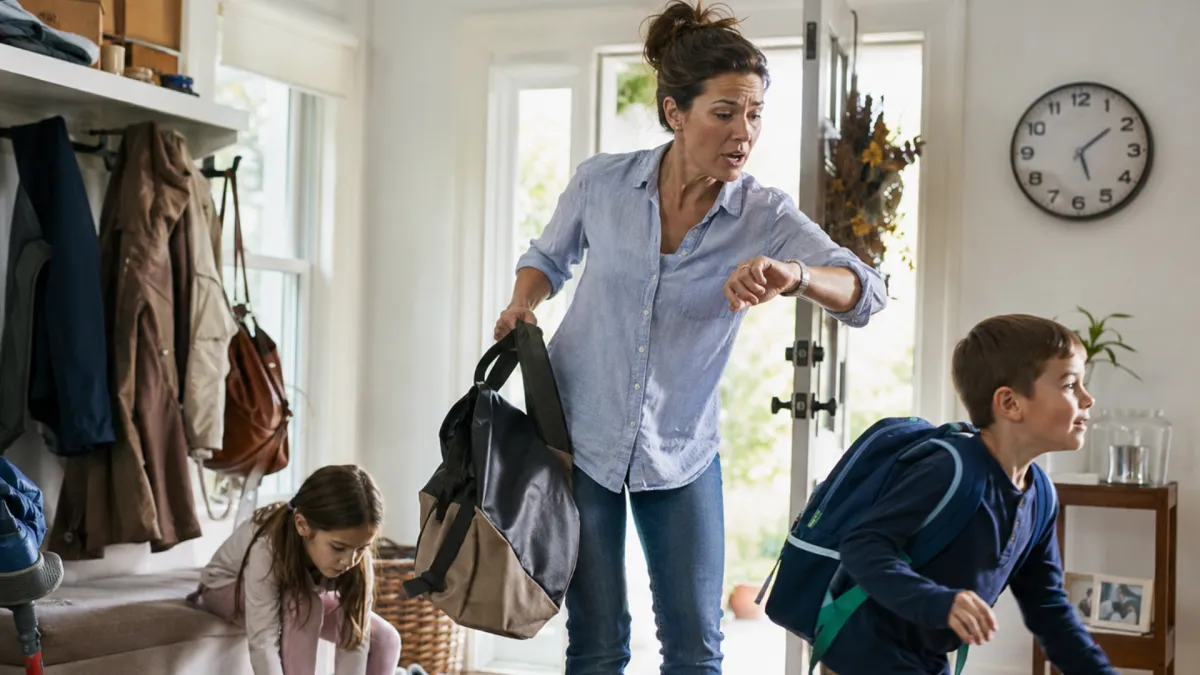
She would also tell you that most mornings feel like a sprint.
“Come on, come on. We’re late. Shoes. Where are your shoes? We don’t have time for this.”
The words leave her mouth before she has decided to say them.
By the time everyone is in the car, her jaw aches and her shoulders are somewhere up near her ears.
Then last week, something stopped her.
Her six year old said it too. “We’re late.”
Same clipped voice.
Same tight little shoulders.
On a morning when they were not late at all.
Priya wasn’t teaching urgency on purpose.
That energy was being absorbed all the same.
The Rush Was Created for a Reason
Priya’s hurry did not come from nowhere.
Somewhere back in her life, rushing made complete sense.
Perhaps being late meant trouble.
Perhaps slowing down meant falling behind.
Perhaps keeping up was how you belonged, how you stayed out of strife, how you stayed feeling loved.
Her mind and body noticed.
And they did something intelligent.
They created a response. Move fast. Stay ahead. Stay safe.
That is what an adaptive survival response is.
Your mind and body, drawing on an infinite intelligence far deeper than conscious thought, creating a way to keep you emotionally safe and protected in the circumstances you were in.
Notice what that means.
Priya never consciously decided to become a rusher.
Her mind and body did choose it, though. It was an unconscious, embodied decision, made in service of survival.
And here is the part that changes everything.
It worked.
The rush kept her safe.
It helped her fit in.
It won approval, or kept her out of trouble, or kept things predictable enough to breathe.
That is why it stayed.
Your system keeps what works.
This was never a flaw.
It was intelligence.
Why It Keeps Running When Nothing Is Wrong
So if the rush was intelligent, where is the issue?
Here it is.
The response was created for a moment that has passed.
And the unconscious mind and body do not know that.
They cannot tell the difference between past, present and future.
They do not check the calendar.
They notice resonance.
So when something in this morning resonates in the body as that old moment, the system recreates the same response.
The same urgency.
The same brace.
The same “come on, come on.”
Not because the threat is here.
Because the body perceives it as here.
This is a misperception, not a malfunction.
Priya is not rushing because of this morning.
She is recreating a response to a moment that finished a very long time ago.
💡 Takeaway #1
Your mind and body created the rush to keep you emotionally safe.
It was an adaptive survival response, and it worked.
That’s why it stayed.
The issue is that your system keeps recreating it when the old threat is nowhere in the room because this is your familiar.
The unconscious mind and body cannot tell the past from the present.
They respond to what this moment resonates with.
Anxiety Hasn’t Risen Because Children Got Weaker
This is the part I want you to hear clearly.
Children today are not more fragile than we were.
They are not less resilient, and they are not failing to cope.
Anxiety has risen because survival has become normal.
Across generations, families, schools and workplaces created the same response Priya did.
Braced.
Rushing.
Scanning ahead for what might go wrong.
All of it intelligent, all of it adaptive, all of it recreated long after the original moment passed.
And here is the trap.
When a whole culture lives in low grade survival, it stops looking like survival.
It starts looking like virtue.
We call the urgency being organised.
We call the control being a good parent.
We call the constant scanning staying on top of things.
Survival hides inside words we approve of.
That is exactly why it can be so hard to see.
Children Absorb the Energy in the Room
Priya never sat her daughter down and taught her to feel rushed.
She didn’t need to.
Children absorb the energy in the emotional tone around them.
They are reading it all the time.
How we respond to stress.
How we handle fear, or move away from it.
Whether emotions are welcomed, or hurried along.
Whether presence is offered, or replaced with urgency.
That energy carries one simple message to their nervous system.
You are safe. Or you are not safe.
And when the message reads as not safe, their nervous system does exactly what Priya’s did all those years ago.
It creates an adaptive survival response to protect them.
This part is worth being precise about, because it changes everything.
Your child does not catch your anxiety.
Anxiety is not passed around like a cold.
Your child creates their own state, in their own body, in response to the energy they are absorbing.
And they recreate it whenever a present moment resonates in the body as a past emotionally unsafe experience happening right now.
This is not because something is wrong with them.
It is because nervous systems are relational.
That is how they were designed.
Which is humbling.
It is also the good news, because the energy they are absorbing can change.
💡 Takeaway #2
Children don’t learn anxiety from instruction.
They absorb the energy in the emotional tone around them.
That energy sends a message to their nervous system: safe, or unsafe.
From that message, their own system creates the state.
Which means the energy they absorb can change.
The Emotions We Learned to Fear
There is one more piece driving all of this.
Somewhere along the way, we were taught that fear, sadness and anger are negative emotions.
Think about what that word does.
When an emotion is labelled negative, we learn to fear feeling it.
When we fear it, we avoid it.
And when we avoid it, it never gets processed.
Avoidance does not remove emotion.
It stores it.
Over time, stored emotional energy sits in the body as tension, vigilance and protection.
That is what we then experience as anxiety.
So instead of learning to feel emotion safely, most of us learned to explain it, analyse it, justify it, suppress it, or distract ourselves from it.
We were taught to manage emotions rather than complete them.
Then we teach our children the same.
Why More Strategies Haven’t Worked
This explains something that puzzles a lot of parents.
We have never had more information about anxiety.
More books, more programs, more techniques.
Yet children are not becoming calmer.
That is not because you have failed, and it is not because the strategies are useless.
Support genuinely helps, especially in pressure moments.
It is because most of what we reach for tries to fix anxiety from the outside in.
Anxiety, however, is created internally.
What is created internally is uncreated internally, through awareness, presence, breath, and letting emotions complete.
Uncreating anxiety is an inside out job, not an outside in one.
Where the Pattern Stopped
So what did Priya do?
She didn’t overhaul her life.
She didn’t add a single new parenting technique.
She set her alarm fifteen minutes earlier, and she drank her coffee slowly.
On purpose. That was it.
A few quiet minutes where she wasn’t braced against anything.
And it rippled.
From a steadier place, the “come on, come on” softened.
Not gone.
She’s human.
Quieter.
And her daughter, absorbing the energy in the house as she always had, had something different to absorb.
Not because Priya lectured her about staying calm.
Because she was calmer, and a child’s nervous system reads the room long before it hears the words.
This is not about guilt.
You created the rush, and you created it for a good reason.
It was your own mind and body doing something intelligent, at a time when you needed to feel safe.
It was never a flaw, and it was never your fault.
It is about responsibility, in the truest sense.
The ability to respond.
That begins the moment you can see what you created, and recognise that the moment it was built for is over.
💡 Takeaway #3
Awareness is what restores choice.
What your mind and body created, your mind and body can uncreate.
The moment the rush becomes conscious, it stops being automatic, and it becomes something you can choose differently.
💡 What You Can Practise This Fortnight
Notice one automatic phrase. Listen for a line that leaves your mouth before you choose it. “Hurry up.” “We don’t have time.” You don’t need to judge yourself for saying it. Noticing it is what loosens its grip.
Name it for what it is. When the familiar urgency rises, remind yourself: “this is a survival response I created a long time ago, and it isn’t the truth about this morning.” Naming it hands the choice back to you.
Thank it, then update it. The rush kept you safe once. It earned its place. And the moment it was built for has passed, which means your system is ready for new information.
Create one slow thing. Choose one small daily moment to do unhurried with intention. A coffee. The walk to the car. The first five minutes of the day. Your calm is not a luxury, it’s the energy your child is absorbing.
Let the emotions be felt. Instead of hurrying your child past fear, sadness or anger, let them be felt with you nearby. Emotions aren’t problems to fix. They’re signals. And an emotion that gets felt is one that can be completed without being locked away and stored in the body.
Lead the tone, without lecturing. Your child is absorbing your state more than your words. The most powerful thing you can offer is calmer energy to be near.
🎯 Want to Go Deeper?
Tired of walking on eggshells around your child?
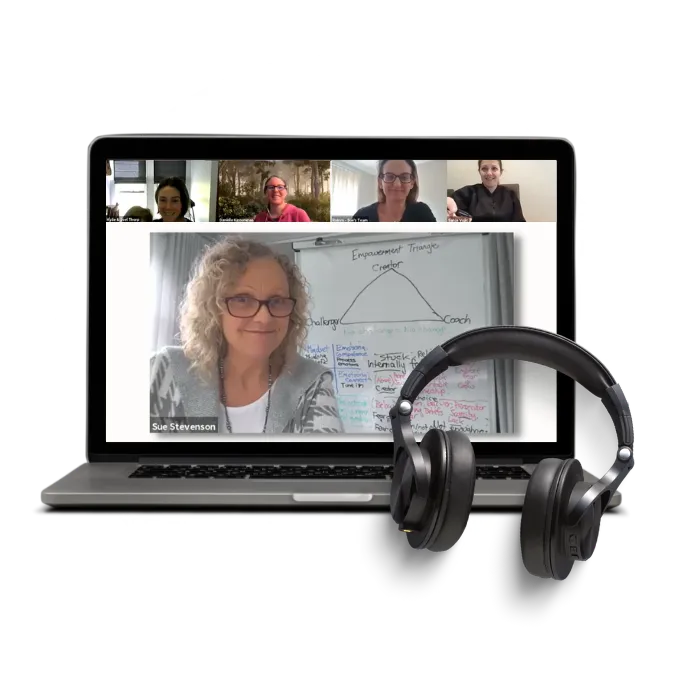
Watch my free 90-minute online class, anytime you like, and discover the proven approach over 1,000 families have used to bring calm, connection, and confidence back into their home.
I’m Sue, an anxiety specialist with personal and professional experience turning stress and chaos into calm.
With care,
Sue 😊